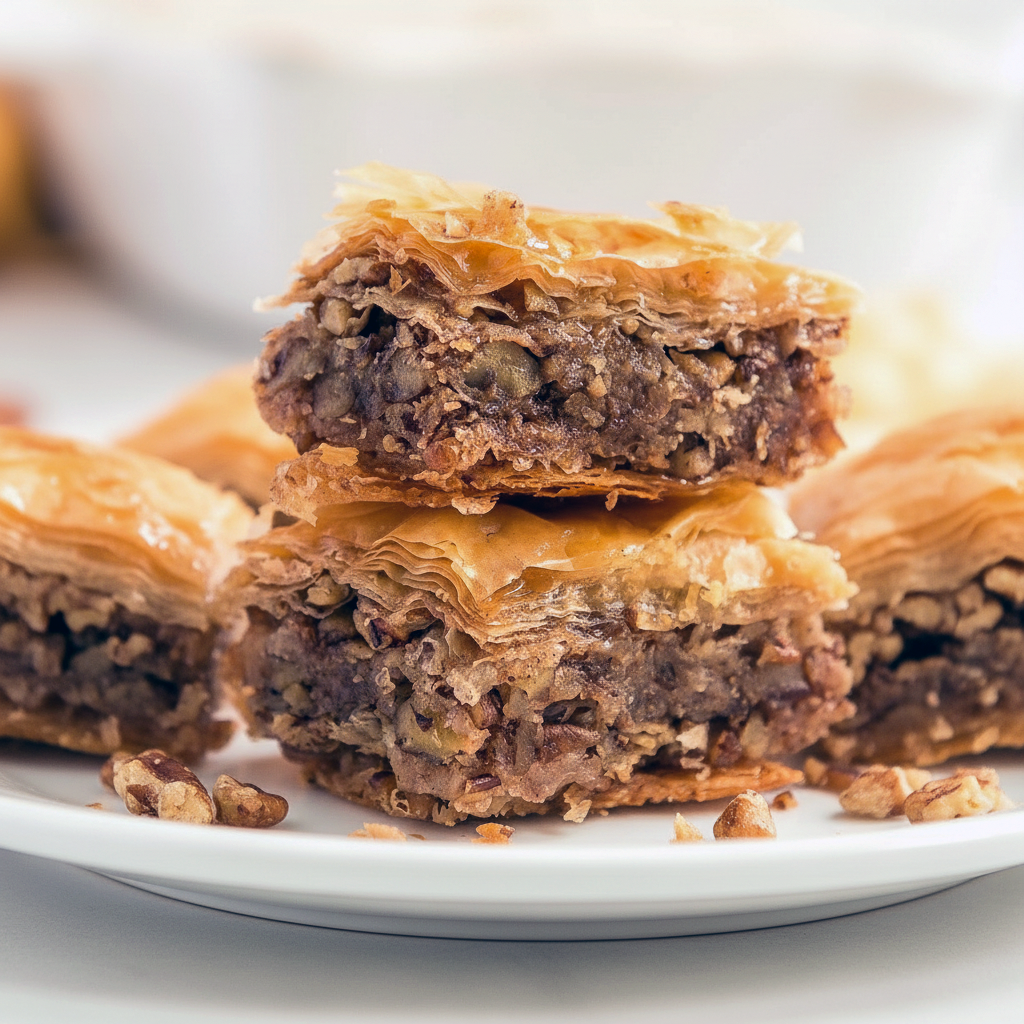
Perfect Baklava: Achieve a Less Sweet, Crispy, and Customizable Masterpiece
For many, the thought of making baklava at home conjures images of endless hours in the kitchen, wrestling with delicate dough and intricate layers. It's often perceived as a culinary Everest, a "king's discipline" reserved for seasoned bakers. But what if we told you that creating divinely tasting baklava, tailored to your preferences – less sweet, exquisitely crispy, and perfectly customizable – is not only achievable but surprisingly straightforward? With the right techniques and a few clever shortcuts, you can have a batch of this Middle Eastern delight gracing your table in under an hour of active prep time. Forget the overly sweet, sometimes soggy store-bought versions; your homemade baklava will redefine your expectations.
The Secret to Heavenly Baklava: Simplicity and Quality Ingredients
The magic of homemade baklava truly begins with embracing simplicity. While traditional recipes might call for making phyllo dough from scratch, the modern home baker has a secret weapon: high-quality, pre-made phyllo pastry. This single ingredient instantly cuts down preparation time by hours, transforming baklava making from an intimidating feat into an enjoyable culinary adventure. The key is to use it wisely, treating each paper-thin sheet with care.
Beyond the convenience of store-bought phyllo, the brilliance of crafting your own baklava lies in the control it offers. You dictate the quality of your nuts, the richness of your butter, and most importantly, the level of sweetness. This freedom allows you to create a dessert that caters precisely to your palate, often resulting in a lighter, more balanced flavor profile than many commercial varieties. With just a few core ingredients – phyllo, butter, a selection of nuts, and simple syrup – you're well on your way to a treat that's far superior to anything you can buy.
Crafting Your Perfect Baklava: A Step-by-Step Baklava Rezept
This particular baklava "rezept" focuses on a rolled method, which is not only easier to execute than the traditional layered tray bake but also yields delightfully uniform pieces perfect for sharing. It’s designed to maximize crispiness and ensure every bite is bursting with nutty flavor, all while keeping the overall sweetness in check.
Preparing Your Aromatic Nut Filling
The heart of any baklava lies in its nut filling. This is where you can truly begin to customize your creation and manage its sweetness. Unlike many store-bought options that might include sugar directly in the nut mixture, we'll keep our filling sugar-free. This allows the natural richness of the nuts to shine through and provides a beautiful contrast to the sweet syrup that's added later.
* **Nut Selection:** While walnuts are a classic choice, especially popular in the Levant, feel free to experiment. Pistachios are another beloved option, favored in Turkey, offering a vibrant green hue and distinct flavor. A mix of both, or even adding a small amount of almonds, can create a unique depth.
* **Texture is Key:** Don't pulverize your nuts into a fine powder. For that satisfying texture and visual appeal, aim for a coarse grind. Use a food processor with short pulses or chop them by hand with a sharp knife. You want a mix of finely ground pieces that bind together and larger, crunchy chunks that provide bite. This ensures a delightful textural experience in every piece.
Assembling the Layers: The Phyllo Roll Method
This technique streamlines the process and ensures even distribution of nuts and butter, contributing directly to the baklava's desired crispiness.
1. **Preparation:** Have your melted butter (clarified butter, or ghee, works exceptionally well for a richer flavor and crispier result) and chopped nuts ready. Work quickly with phyllo dough as it dries out fast; keep unused sheets covered with a damp cloth.
2. **The Roll:** Lay one sheet of phyllo pastry flat on your work surface. Gently brush the entire surface with a generous amount of melted butter. This butter layer is crucial for crispiness and flavor.
3. **Sprinkle and Spread:** Evenly sprinkle a generous layer of your sugar-free nut mixture over the buttered phyllo sheet.
4. **Roll it Up:** From the long side, carefully and tightly roll the phyllo sheet into a log. The tighter you roll, the more compact and satisfyingly layered your baklava will be.
5. **Cut and Arrange:** Using a very sharp knife, cut the rolled log into individual pieces, typically 4 to 5 per roll. The precise size is up to you, but aim for pieces that will fit comfortably in your oven dish. Arrange these cut pieces snugly in a buttered oven-safe baking dish. Repeat this process with the remaining phyllo sheets, butter, and nuts until your dish is full.
6. **Final Butter Bath:** Before baking, liberally brush the tops of all the arranged baklava pieces with any remaining melted butter. This final layer of butter helps achieve that beautiful golden-brown color and irresistible crispness.
Baking to Golden Perfection
Baking is where the magic truly unfolds, transforming those delicate dough sheets into a golden, flaky masterpiece.
* **Temperature and Time:** Preheat your oven to 180°C (350°F) convection or 200°C (400°F) standard. Bake for approximately 25-30 minutes, or until the baklava turns a rich golden brown. Keep a close eye on it, as ovens can vary. The goal is a deep, uniform golden hue that promises exquisite crispiness.
For more insights into creating the perfect texture and flavor, you might find valuable tips in our article:
Homemade Baklava: Divine Taste, Surprisingly Easy Recipe.
The Sweet Finish: Mastering the Syrup and Soaking
While our nut filling is sugar-free, the traditional sweetness of baklava comes from its aromatic sugar syrup. This syrup is not just about sweetness; it's what infuses the pastry with its characteristic flavor, moistens the layers, and ensures every bite is pure indulgence.
1. **Syrup Preparation:** While your baklava is baking, prepare the syrup. In a saucepan, combine equal parts sugar and water (e.g., 2 cups sugar, 2 cups water). Bring to a boil, stirring until the sugar dissolves. Reduce heat and let it simmer for about 5-7 minutes until it slightly thickens.
2. **The Lemon Secret:** A generous squeeze of fresh lemon juice is crucial here. The lemon not only brightens the flavor profile but also helps prevent the syrup from crystallizing, keeping it smooth and pourable.
3. **The Critical Soak:** This is arguably the most important step for achieving that signature baklava flavor and texture. As soon as your baklava comes out of the hot oven, immediately and slowly pour the hot sugar syrup evenly over all the pieces. You'll hear a satisfying sizzle as the syrup penetrates the hot, crispy layers. The heat of the baklava allows it to fully absorb the warm syrup.
4. **Patience is a Virtue:** Resist the urge to dive in immediately! The baklava needs time to rest and fully absorb the syrup. Leave it undisturbed in the baking dish for several hours, ideally overnight, at room temperature. This slow absorption process is what develops that deep, characteristic baklava flavor and ensures the pastry remains moist and flavorful throughout. The baking dish itself helps to contain the syrup, allowing it to thoroughly permeate every piece.
Tips for Your Best Baklava Experience
* **Customization Beyond Nuts:** Elevate your baklava with a touch of spice. A pinch of ground cinnamon or cardamom mixed into your nut filling can add an exotic warmth. You can also experiment with a hint of rose water or orange blossom water in your syrup for a floral aroma.
* **Decoration:** Once soaked and cooled, garnish your baklava. Finely chopped pistachios are a classic and visually stunning choice, adding a pop of color and an extra layer of nutty flavor.
* **Storage:** Properly stored in an airtight container at room temperature, your homemade baklava will remain delicious for several days. It’s an ideal make-ahead dessert for entertaining!
* **Serving:** Baklava is best served at room temperature, allowing its complex flavors to fully emerge. Pair it with a strong cup of Turkish coffee or a glass of mint tea for an authentic Middle Eastern experience.
For those looking to explore more traditional versions, including the beloved debate between walnut and pistachio fillings, be sure to check out our article:
Original Baklava Recipe: Walnut or Pistachio Filling? Decide!
Conclusion
Making perfect baklava, especially one that's less sweet, delightfully crispy, and tailored to your tastes, is a remarkably rewarding experience. By utilizing readily available phyllo pastry and focusing on key techniques like a sugar-free nut filling, proper buttering, and the crucial hot-on-hot syrup soak, you can demystify this ancient dessert. This "Baklava Rezept" is more than just instructions; it’s an invitation to explore a world of flavor, texture, and tradition right from your own kitchen. So, gather your ingredients, embrace the process, and prepare to indulge in a homemade baklava that will truly impress.